
Sustainability · Pharma & Retail Packaging
Cold Seal Packaging: The Most Overlooked Sustainability Advantage in Modern Retail & Pharma
Cold seal packaging replaces heat with pressure — cutting line energy 70–90%, eliminating thermal stress, and delivering cleanly recyclable blisters for pharma, diagnostics, cosmetics, and retail.
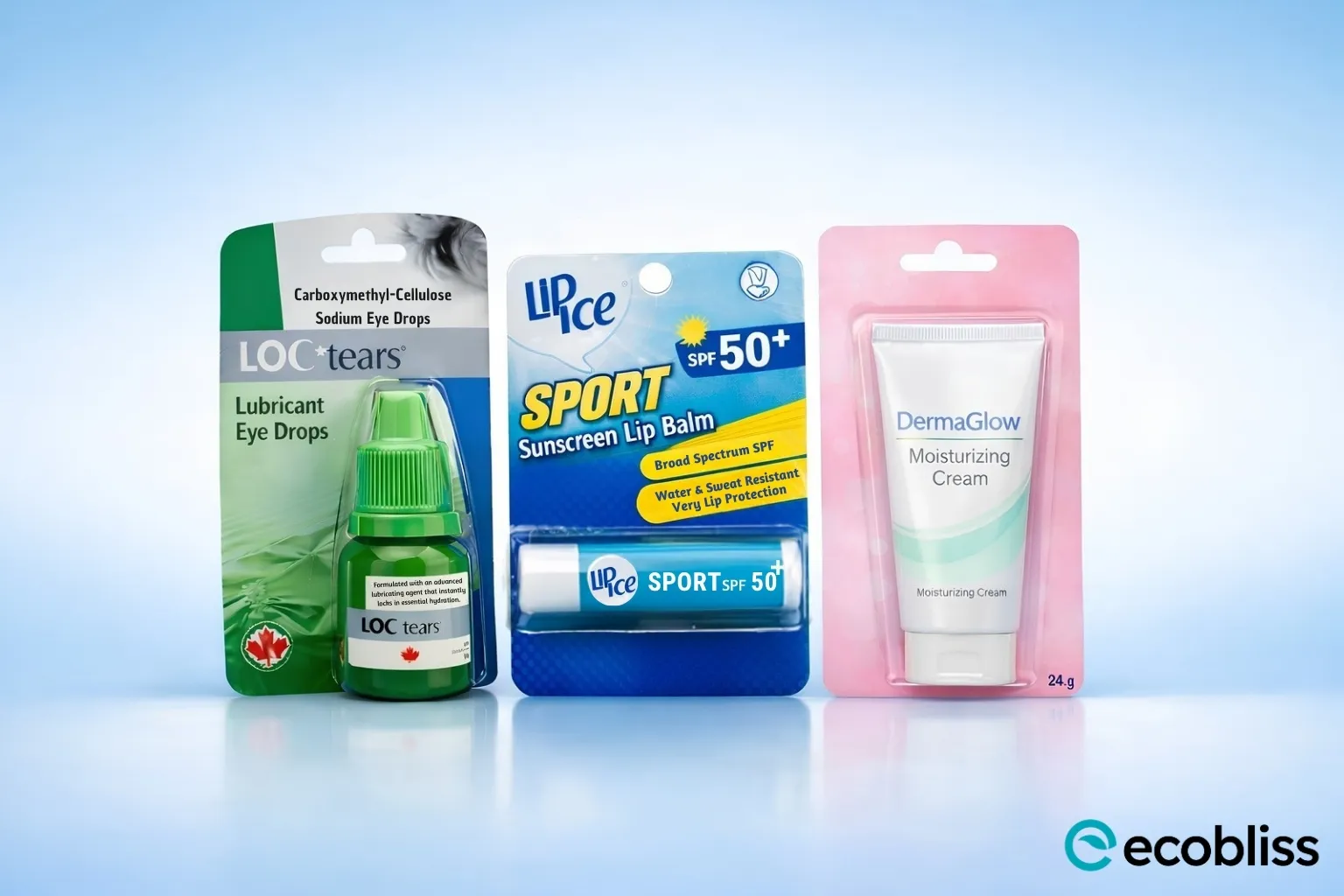
Rethinking sustainability: why the packaging process matters more than we admit
For years, sustainability discussions in packaging have focused almost entirely on materials — reducing virgin plastic, increasing recycled content, shifting to fibre-based substrates, or experimenting with biodegradable options. These conversations matter, but they overlook a major contributor to environmental impact: the packaging conversion process itself.
The energy required to seal, bond, and assemble packaging is not just a technical detail — it directly drives carbon emissions, operational inefficiency, and long-term cost. This is exactly where cold-seal blister packaging stands out. Originally developed by Ecobliss, cold seal technology replaces heat with pressure, eliminating the thermal load that has defined conventional blister sealing for decades.
The hidden carbon burden of heat-seal packaging
Traditional heat-seal blister packaging relies on temperatures between 140°C and 220°C. Maintaining these temperatures requires continuous electrical heating, long warm-up cycles, and high idle energy consumption. Even when the machine isn't sealing, it still draws power to stay hot.
- Continuous electrical heating and idle thermal load
- Additional ventilation to manage adhesive and substrate fumes
- Thermal stress that distorts substrates and degrades inks
- Product-integrity risk for pharmaceuticals, diagnostics, and electronics
Cold seal technology: a process engineered for efficiency
Because the adhesive is pressure-activated and water-based, cold seal systems operate at ambient temperature. There are no heating elements, no warm-up cycles, no thermal dwell times, and no heat-related emissions.
Energy savings often reach 70–90%, directly improving Scope 2 emissions and lowering the carbon intensity of each packaged unit. Pressure bonding is instantaneous, allowing machines to run at higher speeds with shorter cycle times. Mechanical wear decreases, maintenance drops, and overall equipment effectiveness increases — translating into a lower cost per pack.
Cold seal also improves operator safety. Without hot surfaces or fumes, facilities report cleaner air, quieter operation, and reduced ventilation requirements — a safer, more energy-efficient workspace.
Material efficiency and recyclability: engineering for circularity
Cold-seal blister packaging is designed to use minimal plastic, typically lightweight PET that provides clarity and rigidity without unnecessary mass. Because the blister is enclosed between two layers of board, the overall plastic footprint is significantly lower than clamshell or full-plastic blister formats. The board component can be sourced from FSC® Certified (FSC® C154854, FSC® Mix) or recycled fibres.
Most importantly, cold-seal blister packs are engineered for clean separation. When opened, the PET bubble detaches cleanly from the paperboard — a critical advantage, since mixed-material contamination is one of the biggest barriers to effective recycling.
- Circular-economy principles
- Global recyclability standards
- rPET integration
- Low-plastic packaging mandates
Water-based adhesives and seal integrity: the technical backbone
The adhesive used in cold seal systems is water-based and pressure-activated, designed for clean, consistent performance without heat. Because activation doesn't depend on temperature, the process is more predictable, less sensitive to humidity or ambient heat, and safer for heat-sensitive products.
Cold-seal blister packs maintain dimensional stability, resist delamination, and provide tamper-evident opening characteristics. With no heat involved, substrates remain flat, inks stay intact, and printed information remains crisp — ideal for pharmaceutical wallet packaging, diagnostics, cosmetics, and retail.
A manufacturing system built for modern sustainability standards
Cold seal packaging aligns naturally with:
- GMP requirements
- Food-contact standards
- EPR and recyclability mandates
- Low-VOC manufacturing
- Energy-efficient operations
Lifecycle assessments consistently show that cold seal packaging outperforms heat-seal alternatives in energy consumption, carbon footprint, material efficiency, end-of-life recyclability, and throughput.
Conclusion: a technical solution for the future of sustainable packaging
In an industry where sustainability claims are often vague, cold seal packaging offers something rare: a measurable, engineering-driven improvement that impacts both environmental performance and operational efficiency. It is not a marketing concept — it is a proven, scalable technology in commercial use for decades, yet still under-recognised in sustainability discussions.
As regulatory pressure increases and brands seek credible ways to reduce their environmental footprint, process-level sustainability will become more important than ever. For companies serious about reducing carbon emissions, improving recyclability, and optimising production efficiency, cold seal packaging is one of the most powerful and overlooked tools available today. Read more about our sustainability approach.
Frequently asked questions about cold seal packaging
What is cold seal packaging?
Cold seal packaging is a blister packaging method that uses pressure-activated, water-based adhesive to bond materials at ambient temperature — without heating elements, warm-up cycles, or thermal dwell times.
How is cold seal packaging more sustainable than heat-seal?
Cold seal eliminates the 140–220°C heating required by heat-seal lines, cutting energy use by 70–90%, removing heat-related fumes and HVAC load, and protecting heat-sensitive products from thermal stress.
Is cold-seal blister packaging recyclable?
Yes. Cold-seal blister packs are engineered for clean separation — the lightweight PET bubble detaches cleanly from FSC® Certified (FSC® C154854) or recycled paperboard, avoiding the mixed-material contamination that blocks recycling in conventional blisters.
How much energy does cold seal packaging save?
Lifecycle assessments typically show 70–90% lower line energy consumption versus heat-seal, directly reducing Scope 2 emissions and lowering the carbon intensity of every packaged unit.
Where is cold seal packaging used?
Pharmaceuticals, diagnostics, cosmetics, and retail consumer goods — anywhere seal integrity, product safety, recyclability, and high-speed throughput matter.